Tuesday, July 27, 2010

We see the sights in Rochester, NY

For the second Friday in a row, we had the pleasure of spending a part of the day with a World War II veteran. While we were in Rochester, New York for the wedding of Marcia’s nephew, John Clarke, retired Social Studies teacher, picked us up at our hotel and gave us a great mini-tour of Rochester.

We first met John a little over three years ago when he joined Valor Tours the first time Steve hosted for them. John’s brother, Robert, volunteered for military service and was stationed at Clark Air Force Base when war broke out. A survivor of the Bataan Death March, he was one of 361 Americans who were killed by “friendly fire” while on board the infamous Enoura Maru. John was serving with US troops in England and learned about Robert’s death close to VJ Day. Robert was initially buried in one of the group graves in Taiwan. The remains were moved to Shanghai after the war, but his final resting place remains a mystery. John is convinced from documentation he has obtained that Robert and his compatriots were eventually buried at the “Punch Bowl” cemetery in Pearl Harbor, but he has never been successful in persuading the Washington bureaucrats to officially agree with that conclusion. Robert’s name is on the Wall of the Missing at the American Cemetery in Manila.

John took us to Lake Ontario Beach Park, which reminded us just a bit of the port of Duluth, Minnesota. Two piers lead out into the Great Lake, although these are much longer and further apart than the ones we saw last year. There is an out-of-commission railroad bridge about where the aerial lift bridge would be in Duluth. Close to a dozen small sailboats were frolicking in the harbor. Since one flipped over, John believed that they may have been taking part in a training class. It was interesting to watch the young sailor work to right the overturned boat.

Following a drive through downtown Rochester, famous for the Bausch and Lomb, Xerox, and Kodak offices, John took us to the George Eastman House, now a museum. Eastman, the inventor of roll film, started Eastman Kodak. Roll film soon led to motion picture film, so we have the likes of Thomas Edison, the Lumière Brothers, and Eastman himself for that form of entertainment, as well as inexpensive photographic equipment.

Eastman was a lifelong bachelor whose mother came to live with him in the massive house. Besides running his company, he was a major benefactor of the University of Rochester and the city. Kodak is still a major employer in the area, although it has downsized and had to reinvent itself with the proliferation of digital photography and the great drop-off in the demand for both film and printer paper.

Features of the house included a ground floor organ with the pipes behind a wall at the top of the stairs on the floor above. An organist played several waltzes while we toured. The library contains thousands of old, obviously valuable books. There are large rooms for entertaining guests, and one contains the head of an elephant. Outside are two beautiful and well-kept flower gardens.

We are grateful to John Clarke for hosting us for the afternoon and always surprised when someone thanks us, as if we were something special. We assure you that it is the other way around. We are greatly honored to spend time with the vets such as Wally McKay and John, both of whom served in WW II.

The following is self-explanatory response to last week’s newsletter from a loyal reader.

Steve & Marcia –

I'm so pleased to receive THIS letter, in which you speak of Co. "A", of the 194th Tank Battalion! My husband, Edward L. Burke, was Company Commander of that unit overseas-- (in fact, he served as Company Commander for ten months as a Second Lieutenant!) Col. Miller had always been the Co. Commander of the 34th Tank Co. from the inception of the National Guard in Brainerd, until they arrived in FT. Lewis, WA in February of 1941, when the whole thing was reorganized to become part of the 194th Tank Battalion, with Miller being promoted to Battalion Commander as a Lt. Col. and my husband being appointed Company Commander. Ed (my husband) was finally promoted to 1st Lt. and then to Captain after the Jap attack on Dec. 7th, '41. On the day Herb Strobel was killed, my husband was shot and left for dead in that same action. The Japs, coming by on mop-up operations 24 hours later, found my husband -- with four more bullet wounds --temporarily paralyzed but still alive, and so took him prisoner. He survived several different POW camps, including Cabanatuan and several in Japan, and was liberated (with rank of Major) on September 8, 1945. He lived 25 years after liberation, dying on November 9, 1970.

The McKays were near neighbors of the Burke family, but I was a bit younger and barely remember the McKay boys (I think one was a classmate of mine--Brainerd High School, class of 1934), and of course I met Hortense after the war, and treasured her friendship and her experiences. I also have a copy of her original book “Angels of Bataan.”

I really treasure your correspondence!

I've just come home from a stint in the hospital – had a valve replaced, plus one bypass...but I'm doing nicely, thank you!...........Perky Burke

Having graduated from high school in ’34, Perky must be about 94 years of age. This email is presented unedited, and is living proof that you are never to old to get into the computer/email generation. We can’t tell you how glad we were to hear from Perky after a seemingly long gap between letters.

Also as a follow-up to last week’s letter, it has come to our attention that the cleanup of fallen trees on Corregidor will take up to 30 days!

Our friend Leslie Murray writes:

You may want to see the Basyang photos and message that we have put up on the FAME website ... http://www.filipino-americanmemorials.org/

We encourage you to visit the site.

And speaking of visiting, we are now in mid-Michigan for the next two weeks. Email us if you want to try to get together.

Monday, July 19, 2010

194th Tank Battalion; Typhoon Basyang hits Corregidor

We have been enjoying our trip to America. The first few days were spent in the Minneapolis area, centered around two wedding-related events. One morning, Marcia’s Uncle John, who flew in the Army Air Corps during WWII and in the Air Force in Korea, took us for a short outing to South St. Paul’s Fleming Field. We saw restored military planes and vehicles and the small but very interesting museum, all run by the Minnesota Wing of the Commemorative Air Force.

Now we are nearing the end of our three-week stay with Steve’s mom in Virginia, Minnesota, where we once again celebrated the 4th of July at Ely Lake outside of Eveleth. Unlike last year, when the weather was unseasonably cold, we’ve mostly been running around in shorts every day. The hot weather has spawned lots of thunderstorms, some severe with hail and tornados, although only one was near to us so far.

Wallace McKay has been on our April tour twice in recent years. Wally’s sister, Hortense, was in the last group of nurses evacuated from Corregidor barely three days before the surrender on May 6, 1942. Hortense was never sure why she was among those picked to leave, and was the only one of those nurses to remain and serve in the Pacific war after the submarine arrived in Australia. She always had a sense of regret for having to desert her patients. Wally gave us a copy of her book, “Jungle Angel: Bataan Remembered,” which we recommend for a unique perspective.

On Thursday we drove the three hours from Steve’s mother’s house to spend a day with Wally, his wife Margaret, their daughter Patty, and her daughter. We had met Patty in April when she accompanied her dad on the Valor Tour. Wally and his wife spend the warmer months in their lake home, once owned by his sister Hortense, about a dozen miles north of Brainerd in Central Minnesota. Their warm hospitality made us feel like the best blend of family and guests.

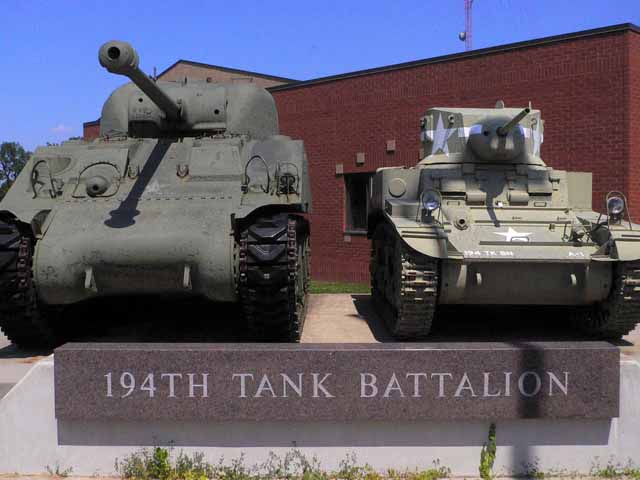
On Friday morning, which would have been Hortense’s 100th birthday, we were honored to be joined for about an hour by Stewart Mills, co-owner of Mills Fleet Farm. In 2007 Stew had hired Steve to guide him and his daughter Marissa for a four-day trip to the WWII sites in Luzon. Stew’s interest stems from the fact that Brainerd was the home of the A Company of the 194th Tank Battalion, which served in Bataan in the early days of the war. He knew a number of the 65 Brainerd-area men who entered the war. Barely half of them came back, victims of the brutality of the Japanese in the Bataan Death March and the prisoner-of-war camps that we have discussed so often.

As Stew was leaving, we were joined by six men who had their own interests in the 194th. Two were nephews of Sgt. Herbert Strobel, the first man of the company to die in the war. The McKay family is also related to the Strobels. Others knew men who had come home to tell their tales of the war, and relatives of those who died. Two of the six men currently serve in today’s 194th. Seven of the veterans are still alive, with two living locally and another in suburban St. Paul. Later we went to the Armory in Brainerd to see their Bataan Memorial which is dedicated to Colonel Ernest Miller, company commander. Every spring the city of Brainerd hosts a run to remember the Bataan Death March. In fact, out front of the armory, which is currently home to the 1st Combined Arms Battalion, 194th Armor (1-194 CAB), is a replica of the old-fashioned Death March markers. Several of the men expressed an interest in fashioning another marker to replicate the new style used along the Death March route in the Philippines.

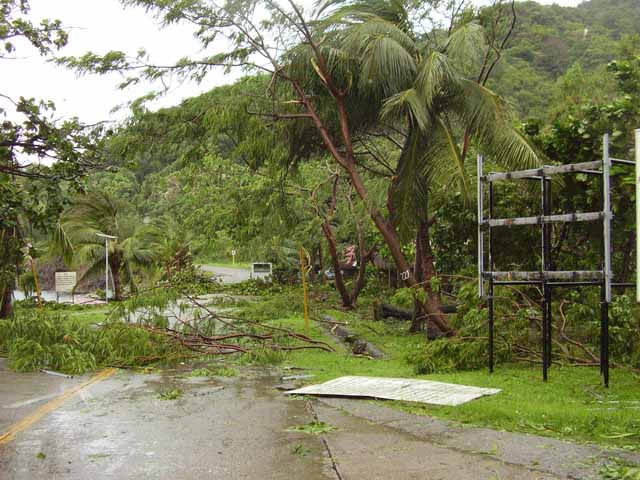
We had heard that Typhoon Basyang hit Central Luzon late last week, and were told that power could be out in areas of Metro Manila for up to four days. The latest death toll in the Philippines is up to 68. In addition, we received several aftermath pictures from Corregidor and we are passing a few along to you. As you can see, there was great damage all over the island, from the MacArthur Café area at Bottomside to the area around Middleside Barracks where we live, and at Topside. We believe one picture shows one of the few trees that survived WWII, near the old Spanish flagpole. We have not been informed of anyone on the island being injured, and we hope that no such news means good news. But it looks like it will require considerable effort to restore the island to its normal safe tourist haven.

On Wednesday we will be heading to New York for a wedding, followed by two weeks in central Michigan before heading back to Minnesota for one final wedding. For our Michigan friends: we should be there from about July 27 to August 11 should you want to try to get together with us. Best to contact us via email.

Thursday, June 24, 2010

We're back in the States, and We're Number One!

We left Corregidor on Sunday afternoon and spent two days in Manila with our new friend Rebecca. We had a great time visiting with her and were able to do last minute business and shopping. A special thanks to Rebecca for taking us in and making us feel at home, Minnesota style.

While in Manila we were saddened to hear that Brian Murray, the husband of our dear friend Leslie, passed away after a lengthy battle with cancer. Brian was a true British gentleman, an engineer who continued working until it was absolutely impossible. We loved to listen to him talk about trains and the rail systems in the Philippines.

We arrived safely in Minneapolis after 18 hours of travel: four hours from Manila to Tokyo, a three hour lay-over, then almost half a day flying over the North Pacific and Canada. It is nice to be back “home.” We are hoping to have normal, warm to hot weather these next two months, although when we arrived it was cloudy and 68 degrees Fahrenheit (20 Celsius) at one o’clock in the afternoon. Brrrrr!!! Last summer it was mostly unseasonably cool during our stay, feeling more like fall to us than summer. We rarely wore shorts, needing blue-jeans and long sleeves to be warm enough.

We do not expect to write our weekly newsletters until we return to the Rock in August. Should anything really exciting happen we may write one or two, but to be honest, we could use a break. It’s real work producing a quality newsletter each and every week.

Speaking of which, the results are in. Our readers have voted “Steve and Marcia on the Rock” the Number One Newsletter/Blog in the Universe. Here are some of your comments:

Yep, you're #`1 in our book. Thanks for your hard work, and look forward to someday getting to the island. Rob and Lynda

You are the ONLY newsletter I read! Lou

Since yours is the only one I read religiously, I must vote for yours. Salud, Bob

My vote counts and I am voting for you. Please continue the great work. Scott

Why do you even bother to ask about the best blog/newsletter? The Kwiecinski letter is the best. Period. None other close. PP

Yours is number 1. Gerald

Re your survey: Yours is the only one I read, so that makes #1 with me. I do appreciate your newsletters very much, thank you. Karl

Of course it is the best. But it is my only newsletter. I enjoy reading and associating with the friendship both have you shown to me.. Visiting the Island is hopefully not my last as I have enjoyed every visit. Steve C.

I vote for "1", yours is the best blog in the universe. - - - To be fair, it is also the only one that I am reading, but I did not want to miss the opportunity to let you know that I enjoy it and feel lucky I got on the distribution list (we met a while ago at a climb up Mount Pinatubo). Thanks for writing the blog. Stefan

This is a no brainer! # ONE OF COURSE! Aloha - Sascha

Steve and Marcia , you're the best! Who else could write the best newsletter/blog???? I want to make sure my vote counts. Keep up the good work guys and God bless you !!! AIDA

The best newsletter on the universe is Steve and Marcia on the Rock…. Yehey Galo

Your blog is the best and most interesting. Kathleen

You are the best and only newsletter/blog that I read. I say you win hands down!! I enjoy reading them. (in honor of the rain) Patty

I don't follow blogs on the web. I read yours via my Inbox. By default the, you get the prize! Maria

My vote goes to Steve and Marcia on the Rock. I love your pieces of history on the war, your news tidbits & commentary, as well as the photos! Keep up the good work on informing everyone of life on the Rock. Mary

#1 - Marcia and Steve on the Rock!! I look forward to each one! And save them! Interesting material - Well written! Good fun to know where and what you are writing about re: Corregidor. Makes them meaningful. Could make the newsletters/blogs into a book, Steve. – Sue (and Jack, too)

There’s no doubt that ‘Steve and Marcia on the Rock’ is a very informative, detailed and interesting newsletter but honestly, I would not know if it is one of the best or simply the best there is since it is the only blog that I read so far. Just the same, I whole-heartedly vote for it. My best to both of you, Eli
Yours is the best blog/newsletter of course! I read all your releases. Keep on! Best regards, Rolly

I am voting for: Steve and Marcia on the Rock……..hands down, the best of all newsletter/blogs in the Universe. Frankly, none other interests me. My best regards, Fidencio

NO QUESTION ABOUT IT!! #1 IS THE CORRECT RESPONSE: STEVE AND MARCIA ON THE ROCK. BERNICE AND EVERETT

(Everett is a Corregidor Veteran and POW)

We think you get the idea, and we thank each of you for your vote. Some of you admit that you don’t read other blogs. Why would you need to? The final tally wasn’t close. The vote was unanimous. What a compliment!

Seriously, we do try to do our best, mixing in a bit of humor – such as this vote – with the serious business of telling our story. We do this to promote the best interests of the World War II Shrine which is Corregidor, the best preserved battlefield in the Pacific.

Steve and Marcia on (actually, temporarily off) the Rock – The Number 1 Newsletter/Blog in the Universe as voted by our unbiased readers in a scientifically conducted internet poll,! – To Infinity! And Beyond!

P.S. We will have access to email during our trip, so you can stay in contact with us if you wish. Email us if you want a phone number to reach us while we’re in the States.

Thursday, June 17, 2010

We have a peaceful weekend

We are getting ready to fly to the United States next Wednesday. We tentatively plan to spend about three weeks in Minnesota, mostly with Steve’s mother up on “the Range,” then off to Rochester, New York to attend a nephew’s (Marcia’s side) wedding, a couple of weeks in central Michigan, and finally back to Minneapolis/St. Paul for another nephew’s (Steve’s side) wedding before returning in mid-August. We hope see some of you while we are there, and will be regularly checking email to keep in touch.

Several people wrote to make their best assessment of the flower/tree that we featured on May 13. Philip Thompson of the American Embassy in Manila wrote the following:


I increasingly think that the little tree in question is Murraya paniculata, commonly called either "Mock Orange" (not to be confused with the more temperate-region plants of the same common name: Philadelphus coronarius and Pittosporum tobira [that's the problem with common names!]), or "Orange Jasmine" (although it is not related to the true jasmines -- genus Jasminium; family Oleaceae). It's native to India and East Asia, but was probably introduced to cultivation here in the Philippines as an ornamental garden plant for the landscape.

The pictures on Wikipedia confirm Philip’s conclusion, and we thank him. Another mystery solved! Right now it is in the second round of nighttime blooming, again almost overwhelming us with its fragrance while we lie in bed 30 feet away.

Saturday was June 12, the 112th Anniversary of Philippine independence from Spain. Since rainy season is due to begin at any time, and it is a three-day holiday weekend, this was probably the last big weekend for visitors for several months. Pretty soon SCI will cut back to Thursday-through-Sunday service except for special bookings, subject to weather permitting travel in the bay. For the past nine months or so their ferries have run pretty much every day except when Typhoons Ondoy, Pepeng, and Santi came through last year.

Late on Friday, Steve received a call from Sun Cruises asking if he was available to guide on Saturday. Unless he is specifically requested in advance, Steve never knows what kind of group to expect. When the call is last minute, his guests can be a “surprise package.” Recently, you might recall, he wrote about having a bus full of Polish tourists combined with a group of young Filipinos, making for an interesting day. This time Steve was assigned one of two busloads of a group of professionals who belong to AMDA International, the Association of Medical Doctors of Asia. AMDA chose Corregidor as the site for their 9th Annual ASMP memorial, focusing on the connection between soul and medicine.

It was pretty much a normal tour, although the Topside component included a wreath-laying ceremony at the Parachute Dome. The “floral offering for peace” was formalized by a number of Knights of Columbus, complete with their fancy hats, capes, and shiny swords. A few members spoke briefly. The theme of the event, which was on their flyer for the weekend, was, “This memorial is a commemoration for the lost lives during the war. It is also a celebration of, and a prayer for, peace. It is a call for forgiveness and a petition that there will be no more war.”

Steve was invited to eat lunch with the International Advisor, Dr. Primitivo Chua, a retired Filipino-Chinese physician, and the AMDA International President, Dr. Shigeru Suganami of Japan. It was an interesting lunch. Steve commented to Dr. Chua, 75 and able to remember the Japanese atrocities that took place in Metro Manila 65 years ago, that many Filipinos his age would have a hard time sharing a meal with anyone from Japan. Dr. Chua’s philosophy is that we must learn to forgive but never forget. Dr. Suganami had many questions for Steve, but because the doctor’s English is heavily accented, Steve often had to ask him to repeat his questions, sometimes more than once. Dr. Suganami proved to be a very kind, gentle man, who was in no way offended by any of the comments that Steve made concerning the Japanese actions and America’s response in World War II.

After the tour Steve was invited to bring Marcia and join in their evening activities. The first consisted of planting six trees near the South Beach. We were simply observers until they got to the last one, when we were asked to participate. This particular tree was planted on behalf of Lions International. Unknown to them until that moment, we had been active members in the Lions for a few years before moving to Corregidor, where participation is impossible. Nevertheless, it was nice to be a part of the group again, if even for just a few moments.

Mass followed, which was co-officiated by a newly-ordained Filipino priest and a mostly-retired Belgian-American who has lived in the Philippines for over 35 years. Then we proceeded to a memorial service which began with inter-faith prayers. A Japanese Buddhist monk led off, punctuating his prayers with a bell and a piece of wood which he struck at times. This was followed by Catholic, two “flavors” of Evangelical, and Greco-Russian Orthodox prayers. Several talks followed, including one by James So, President of the Chinese Federation for Global Peace, Philippines. Steve was slightly embarrassed, as Mr. So talked about how, at first, he was kind of shocked that their tour guide was not a Filipino. He then praised Steve for the excellent job that he’d done with the group, emphasizing the knowledge and emotion that Steve pours into his guiding. Dr. Suganami expressed similar sentiments, and then spoke of his deep desire to see nations look for ways to build friendships and seek to support one another in crisis situations. Afterwards we all headed to the South Beach, where, after a blessing by one of the priests and a prayer offered by an Imam, we had a wonderful fish dinner served by the Corregidor Inn staff. What had begun as a five-hour tour for Steve ended up being a whole day, with dinner lasting until 9:30.

On Sunday we saw the group off at the hotel, and they once again expressed their appreciation for our participation in their Saturday festivities. We look forward to meeting some of them again, applaud their extensive international efforts to foster peace and cooperation between the nations of Asia, and join their prayers for no more wars.

Thursday, June 10, 2010

Who writes the best newsletter/blog?

After going almost seven months with less than two inches of rain – which fell in two consecutive days in April – it had started to rain here while we were in Manila for the Memorial Day ceremony. Starting June 1, it rained off and on for the next six days, such a contrast to the sunny, blazing hot days of May. Since then we have returned to sunny skies with thunder in the distance each afternoon, only threats of actual thunderstorms on Corregidor. This is normal; in June the temperatures begin to moderate as the sun passes north of here and rainy season approaches. We are near the 14th parallel, so for several weeks every year the shadows point south at noon, something that is a little hard to get used to. Contrary to popular belief, the Philippines is not in the South Pacific.

It is amazing to us how quickly the dormant plant-life responds, once measurable rain arrives. All of the bushes and trees pop with new branch and leaf growth, and the crispy brown grass begins to send out new shoots from roots and seeds. The whole island looks fresh and green again. Soon the jungle undergrowth will fill in with leaves and vines, making our explorations more challenging.

On Sunday Steve guided for guests of the Australian Embassy. Outgoing Australian Defense Attaché Vic Jones, a career naval officer whom we first met last year on Leyte, was accompanied by incoming attaché, Craig White, from the Australian Air Force. As usual, Steve’s tour consisted of the typical history of the island and the gun batteries, but also included some information about his father Walter’s experiences here. Vic, who said that this was his sixth visit to Corregidor, told Steve that by doing so he made the tour personal and special. The group was fortunate to have good weather, cloudy, making it very comfortable temperature-wise, and no rain during the hours they were on the island. Since some of their contingent was from the Australian Defence Force “Centre for Defence and Strategic Studies,” they presented Steve with a very nice baseball-style cap from their organization.

On Wednesday we were delighted to host Nancy and Laura, two women who have spent many years doing mission work in the Philippines. Nancy and Marcia struck up a conversation at the Memorial Day ceremony. Nancy had been to Corregidor a few times, most recently nine years ago and wanted to see it one more time before returning to the States. She had never stayed overnight, and wished to do so before heading to the US on leave. Laura, a Canadian, had been in the Philippines for about 25 years, and had never been to the Rock. We spent the day showing them around, including some of the remote sites, and watched the sunset together at Battery Grubbs. On Thursday we took them on a tour of Malinta Tunnel before their return to Manila. We always encourage people who come here to spend at least a night in the Corregidor Inn so that they can experience the out-of-the-way places on the island, as well as having time to swim, relax, and enjoy the peace, beauty, and clean air.

Steve’s parents, Walter and Mary Anne Kwiecinski, were married 60 years ago this June 10. Their wedding took place in the old Sacred Heart Catholic Church on the north side of Virginia, Minnesota, across the street from Mary Anne’s family home. Forty or fifty years ago the parish moved to a new building a couple of blocks down the hill. The old church building is still there, although it has served a number of purposes, including being a Salvation Army drop off center. Today it is a private residence, a rather odd one from outward appearances. In 1967 “Grandma Krebs” passed away, and the following year Walter and Mary Anne bought the family home from her estate. Walter lived the last 20 years of his life in the Krebs home, and Mary Anne is approaching 65 years in the house in which she was born. Although Walter passed away over 22 years ago, we send our love to Mom and wish her happy memories on what would have been their 60th anniversary.

In an attempt to get an idea of who is reading this newsletter/blog and whether or not it is being appreciated, we would like to take a scientific opinion poll of our readers. We were going to ask several questions, starting with the best newsletter in the Philippines, then Southeast Asia, the Eastern Hemisphere, and then the world. But we felt it would easiest to go for the whole enchilada. So we simply ask you to respond to the following question:

What is the best newsletter/blog in the Universe?
1. Steve and Marcia on the Rock
2. Other – Please specify URL, purpose, and author’s name (including full middle name), city and country of birth, and place of birth

Think your opinion doesn’t matter? Feel your vote in the latest presidential election went unnoticed? You could be the one that makes this the number one newsletter/blog in the universe! We thank you for your vote.

Steve and Marcia on the Rock – To Infinity…And Beyond!

Thursday, June 3, 2010

We attend the Memorial Day ceremony at the American cemetery

On Saturday Steve guided for Sun Cruises and was assigned two groups, around a dozen young Filipinos and a slightly larger group of travelers from Poland. Steve was told that the tour coordinator thought she was assigning Steve a group of Americans, but when she found out they were Polish, she said, “That’s okay. I think Steve is Polish.” When Steve introduced himself on the tranvia the group at first thought maybe they had a Polish guide. Since Steve speaks virtually no Polish and the young Filipinos of course even less, Steve presented his tour in English and one of the Polish ladies translated for those in the group who needed it.

Having a last name of Kwiecinski (properly pronounced something like “kveh-CHEEN-skee” – we soften it to “Quiz-IN-skee”) only means that Steve’s paternal ancestors came from Poland, not that he speaks Polish. We have one of the easier Polish names to look at and try to pronounce. One of the tourists spells his last name Przetocki. He said that it is pronounced “sheh-TOAD-skee.” The group said they know many Kwiecinskis in Poland and that the name comes from a spring flower. Anyway, they were a nice group, and they invited us to come see them when (if) we travel to Poland.

As soon as the tour was over, we boarded the Sun Cruiser II with the tour guests, and headed to Manila. We spent some time in Robinson’s Place having dinner and dropping off some slacks for alterations. We have both gotten skinnier living here, in part because we have far less access to junk foods – especially Steve – and in part because it’s often too darn hot to have much of an appetite. Once again we stayed at Hostel 1632, which is managed by Agnes Jurado, former manager of the Corregidor Inn.

The main purpose of this trip to Manila was to attend the Memorial Day commemoration held at the American Cemetery. Each year groups volunteer to place small American and Philippine flags in front of each of the 17,000 graves. At least three times as many people attended as at last year’s Veteran’s Day ceremony in November, with around 20 wreaths being presented by various organizations. Some no doubt came for a chance to meet the new American Ambassador to the Philippines, Harry Thomas, and that certainly influenced us as well. Thomas, who replaced the first female ambassador to the Philippines in April, is the first African-American ambassador here. We were able to welcome him and invite him to come to visit Corregidor at his earliest convenience, and we certainly hope he can work it into his schedule before we leave in late June to spend two months in the States.

The following comments came from our readers concerning the May 24, 1942 march on Dewey Boulevard:

During the "march" through the streets of Manila, a Filipino band was ordered by the Japanese to play something showing how defeated the Americans were. The prisoners were pretty down until the band struck up "the Stars and Stripes Forever". So the story goes the Japanese "escorts" couldn't understand why the Americans straightened up. – Larry Gundrum

My mother remembered the mini-march and would tell us how she and her cousins went down to watch and hope against hope that they would see a family member or someone else they knew. Sometimes they would even do the "V" for victory signal when the Japanese weren't looking. – Bob Hansen

As we toiled along Dewey Boulevard, objects began to appear, arching thru the air into the column of Americans. The man directly ahead of me managed to catch one missile and it proved to be several long, brown cigarettes tied with string. Large kitchen matches filled the crevices between the cigarettes. I witnessed round rice cakes, food wrapped in banana leaves, small bananas, an incredible array of food tossed to the hungry prisoners! But now the Jap guards began to shout at the Filipinos, shaking their rifles, threatening these people who were attempting to help the Americans. First one, then many of the Filipinos were struck with rifle butts, jabbed at with bayonets! Soon the torrent of food lessened, and only an occasional object was tossed into the column of weary men. Now the people lined along the curbs watched hopelessly for a chance to throw some article of food, when the guards were few, and hopefully looking the other way.

The march continued along Dewey Boulevard, the guards now beating the Sunday crowd back instead of encouraging them to move closer. Realizing the Filipino people were attempting to help the Americans, the Japs now turned on the native citizens, and punished them for throwing food to the prisoners. The trek through Manila continued, and our tired bodies began to rebel. Men began to lag behind and they were grabbed by other, more able men, and helped along. Fortunately, this march did not resemble the horrors experienced by the participants of the Bataan Death March, about which we would learn later. – the late Al McGrew, as submitted by Paul Whitman


Paul Whitman added the following:

Can we NOT call it a mini-death march? There's too much confusion already – maybe call it "the march of the surrendered" or anything. I'm not much for "March of Shame" though I recognize that the weight of use is probably against me there.

When we called it “Mini-Death March” and “March of Shame,” we were repeating what other participants called it, either in their books or in personal interviews with us. We have pointed out in the past that there is NO COMPARISON between this and the real thing which occurred in April, and on numerous occasions have stated categorically that the survivors of Corregidor were not Bataan Death March participants.

Steve’s father Walter made this observation:

We had to march, too, but it wasn’t like a death march. We marched down Dewey Boulevard to go to this prison [Bilibid].

There was only one “Bataan Death March” and numerous “Walks of Shame.” We kind of like “The March Down Dewey Boulevard.”

Dewey Boulevard was originally named for Admiral George Dewey, victor of the Battle of Manila Bay on May 1, 1898. Since then, it has been renamed Roxas Boulevard in honor of the first president of the new Republic of the Philippines, Manuel Roxas. In 1942 the boulevard ran several miles along the waterfront from the south in a north-northeasterly direction and was mostly lined with single-family residences. Since then, much of the bay to the west has since been filled in, and today it is an area of commercial buildings and high-rise apartments.

We were dry through May, but beginning early on June 1 it began to rain and has been cloudy and raining off and on ever since. This may be an early onset of rainy season. We’ll know in the next few days.

Incidentally, Sunday, May 30 was the 40th anniversary of Steve’s graduation from St. John’s Prep School in Collegeville, Minnesota, which traditionally held its graduation on Memorial Day.

Thursday, May 27, 2010

We remember more anniversaries

Our jeep recently had trouble with its charging system. Unable to diagnose the precise problem, island personnel deferred to a trained mechanic who couldn’t get here for a few days. We made do, walking a little more than normal. Actually, the jeep was otherwise running well, and we could use it as long as we didn’t need the battery for starting or headlights. Thus we had to park it at the top of a hill near our house, release the emergency brake, depress the clutch, let it roll to gain sufficient speed, release the clutch in third gear to start the engine, and away we would go. We just had to remember not to shut it off unless facing downhill – if we forgot, there are usually enough guys around for a laugh and then a push. Just another benefit of island living – starting and driving a jeep “Filipino style.” It kind of reminded Steve of a time during college when his car lost reverse. Until he could get it fixed, he had to drive the car like that for a couple of weeks, making sure never to park it in a place where he needed reverse.

Fr. John (Nariai Akito) visited Corregidor again this week. You might remember that he is the retired Japanese priest who says his masses in Latin. He came to our house one afternoon and spent a couple of hours visiting with us. We found out that Fr. John is 75 years old, making him ten at the end of the war. He was not in Japan at the time of the intensive bombing of Japan, since his father worked in a textile factory on an island near Seoul, Korea, where he, his two brothers, and mother lived. While he was here we took a walk to Middleside Barracks, where some Japanese writing is still visible. He told us that the writing says something like, “No entry. Violators will be severely punished,” and also includes the name of the regiment, “Yoshido Butai.”

Because May 6 was the date that Corregidor surrendered, there are a number of significant dates that followed closely. On May 8 the prisoners were rounded up and made to stay on a small beach area, known as the “92nd Garage area,” leaving about 12,000 men with one water spigot and virtually no toilet facilities other than the ocean. According to Col. Paul Bunker, on May 22 it finally rained, and on the next day almost all of them were loaded onto several boats to be taken to Manila. On Sunday, May 24, they were dropped off on the south end of Manila and made to walk ashore and then march up Dewey Blvd. (now Roxas) to T M Kalaw Street, Taft Avenue and eventually to Old Bilibid, the Manila city jail. Col. Paul Bunker: “As we marched along we could see Filipino curiosity seekers being kept back by Jap sentries. Many grinned at us, but whether in derision or otherwise we could not tell. Downtown, more people lined the streets, but were very quiet”. Bunker’s War, p. 168.

Many Manila residents witnessed the “March of Shame,” including Peter Parsons, who sent us this recent email:

I have been mulling over my experience of giving water to Corregidor guys who were lying down on the grass in front of our house.

This was at the intersection of the Blvd and St. Scholastica Street.

Three guys were lying down on their backs, feet facing the bay. A sentry was hovering around them but not doing any damage to anyone. My family was gathered at the fence of our yard just a few feet away. My mom was looking for people she knew. Included in our family were my older brother, also a baby brother, a Chinese Amah and my dachshund and two Japanese sentries that lived at our place--as we were under house arrest.

Because of "my own" sentry and because I could speak a lot of Japanese by then, I was allowed to bring out a large bottle of water, at least two gallons.

I remember one guy being a lot taller than the other two. I wonder how many guys would be nearly a foot taller than their mates on Corregidor.

It haunts me that this might very well have been your dad lying there.
[Steve’s father Walter was 6’ 6” and was in this group of POWs. We have no way to know if he was the man Peter remembers]

Whoever it was, the tall one got up on his elbows and said, "Thanks, buddy."

I had just turned five years old. I have treasured that scene and those words all my life.

Best wishes,
Peter

Another one of our readers, retired Manila attorney James Litton, has vague memories of seeing the soldiers as they plodded down T M Kalaw.

So May 24 was the 68th anniversary of the mini-death march in Manila, which ended at Bilibid Prison. From there the Filipinos were sent to Camp O’Donnell. Some Americans were sent to Japan, others to Mindanao in the southern Philippines, but most eventually were sent to Cabanatuan before being shipped to Japan and other East Asian POW slave labor camps. Steve’s father Walter spent 10 months in Bilibid – the last five in the hospital ward – before being sent to Cabanatuan, and then to Japan after a brief layover again in Bilibid.

And speaking of anniversaries, we have one reader who was a child in England during WW II and remembers the German rocket attacks on London, another native Brit who flew bombers over Germany, and two native Germans who can remember bombing by the Americans and British. Having been reminded by more than one reader that the 65th anniversary of Victory in Europe Day occurred on May 8, we wish to pass along our belated remembrance of that important date in world history. VE Day was not necessarily good news for the U.S. troops who had been fighting in the European theatre, because the healthy ones were quickly reassigned to the seemingly inevitable land invasion of Japan, with American casualty estimates of one-half to two million depending upon the determination of the Japanese people in defending their homeland.